
Time Outside of Our Hands
There's a season for everything, even what we want to avoid

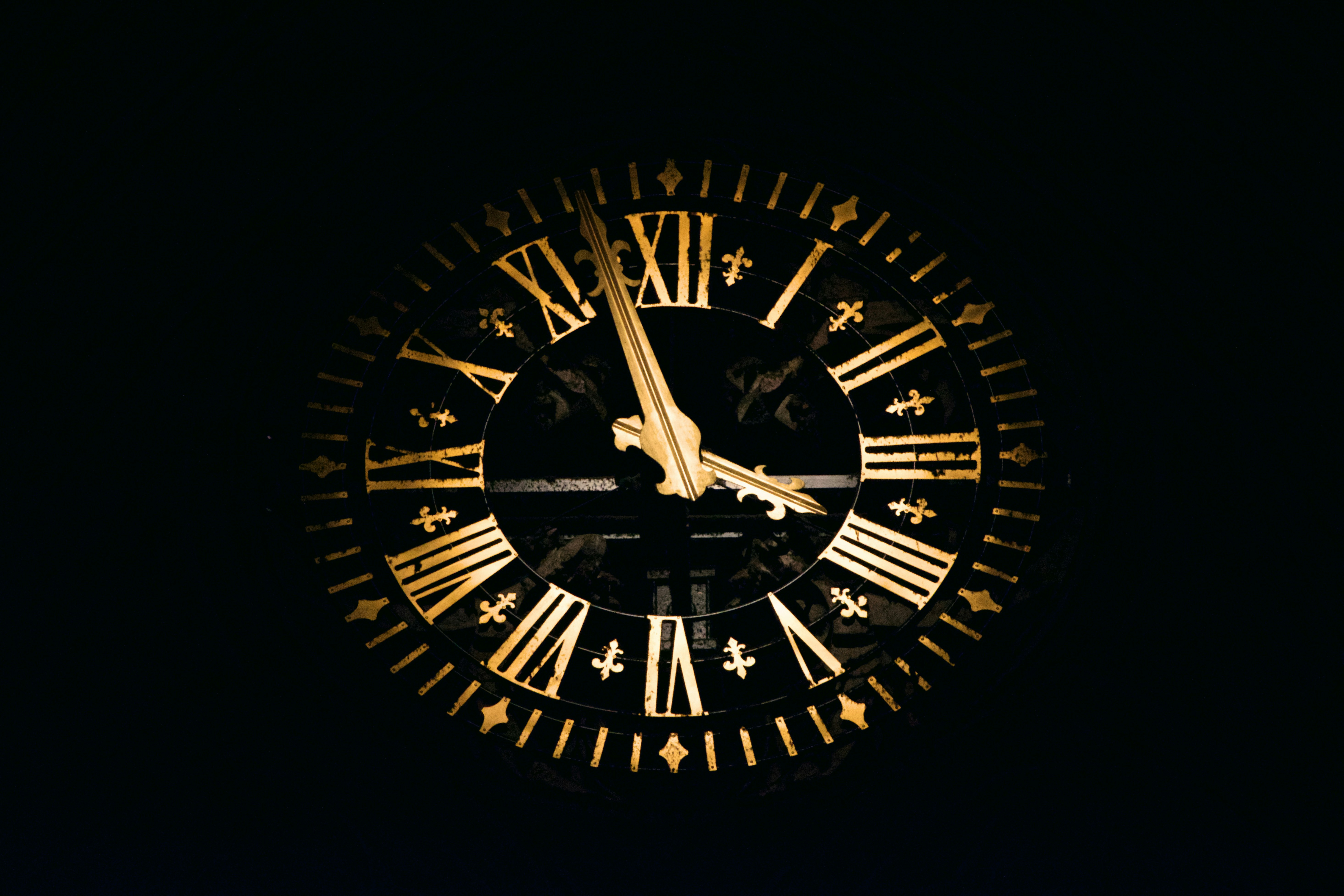
Final exams have been marked and course grades submitted. Graduation has come and gone, along with the mad rush of landscaping, picture taking, and moving out of dorm rooms.
For me, I have a few more end-of-year reports to write until I will be firmly in Summer Time.
This is a nice thing about being a college professor—our schedules and duties are usually obvious. We know when to prepare syllabi and course material; we know when common exams and paper deadlines fall during the semester; we know when the end-of-term chaos begins and ends.
Many jobs have predictable rhythms like this. But if we zoom out a bit, knowing the times and seasons of our lives is not always so obvious.
A Season For Everything
Ecclesiastes 3 opens with the most well-known portion of this little-read book. The Byrds made Ecclesiastes 3:1–8 popular with their 1965 hit Turn, Turn, Turn. This song has tremendous cultural staying power in spite of lyrics which are mostly just Scripture.
But while the Byrds turned this passage into a peace song, this biblical poem does much more. Yes, there really is a time for everything (Eccl 3:1). The opposites that pepper these verses indicate that there is a time for each of those extremes as well as the whole range of options in between.
By the end of this passage, we’re left with two questions. Who controls these seasons? How do we know when our seasons are changing?1
The Limits of Time
As the Preacher transitions from poetry to prose, he writes about how man interacts with God regarding time. Though the worker has no gain from his toil (Eccl 3:9, compare with 2:22) and the business God has given man is unpleasant (Eccl 3:10, compare with 1:13), everything is beautiful in its time (Eccl 3:11).
God has put eternity into man’s heart, so that he would be curious and long for the infinite (Eccl 3:11). Man wants to know like God knows and to understand like God understands. But man is not God and does not have the capacity for the same knowledge. This explains our questioning hearts—in seasons of suffering, grief, and confusion we desperately want to know why. We often demand the understanding that comes from knowing the whole and how all the parts interact.
We want what is not ours to have. We want what is God’s alone.
Though man does not know God’s times, there is pleasure to be had in his own time. There is nothing better for man than to be joyful and do good as long as they live. (Note that man’s finiteness is once again in view when the Preacher describes this good.) God’s gift to man is that he should take pleasure in all his toil on earth.2
Outside of Time
Man has the limitation of time and death, but God experiences no such limits. (This makes the incarnation of Jesus that much more glorious and breathtaking.)
What God does endures forever (Eccl 3:14). This is in stark contrast to the works of man which will pass away, be forgotten, or both. God has designed this permanence to point to himself, that we might fear him (Eccl 3:14).3
Time For Judgment
Not only is man limited in what he can understand and in the longevity and importance of his works, but he makes a terrible judge. Currently, there is wickedness in the places of justice and righteousness (Eccl 3:16).
The Preacher then points to a category absent from the poem which opened this chapter: there is a time for judgment. Notably, for some this will occur outside of the “times” which we can comprehend as part of our lives. God will judge the righteous and the wicked (Eccl 3:17).
If you’re tempted to feel smug as one of the “righteous” when reading that last sentence, here’s a preview of things to come in Ecclesiastes: “Surely there is not a righteous man on earth who does good and never sins” (Eccl 7:20). Without a Savior, we would warrant the judgment of the wicked after death.
Man’s time will end—with regard to longevity, man is no different than a beast—we all die and return to the dust of our origins (Eccl 3:18–21). The Preacher stresses that man has no advantage over the beasts in this regard.
However, this limitation can bring joy. In an echo of verses 12-13, there is nothing better than for a man to rejoice in his work. After all, he cannot know what comes after him (Eccl 3:22).
Joy in Our Time
Time is one of the defining features of our lives. We are beholden to our clocks, the hours of daylight, and the fluctuations of the weather throughout the year. For something so essential to our existence, we have so little control.
By the end of chapter 3, the questions suggested by the poem (verses 1–8) have clear answers. God controls the times, he is the one in charge of our seasons.
One of the themes running through Ecclesiastes is that joy is found in living within (rather than fighting against) our human limitations. While there is no ultimate gain for us from our toil, there is a joy to be found when we recognize food, drink, and everything else as a gift from God.
As a child of the 90s, and as a palate-cleanser from the previously-mentioned hippie song, I am obligated to demand that you give the late Chris Cornell at least 5 minutes and 45 seconds of your time.
An interesting question I hope to pursue in a future post: does the Preacher mean we are to rejoice in the fruit of toil or in the toil itself?
The fear of God is a foundational theme of Ecclesiastes; see Eccl 12:13. This also will be the subject of a future post.